When custom software is worth owning —
custom-softwaresmall-businesssoftware-ownershipbusiness-automation
Watch “Own what makes you different” with captions and a transcript.
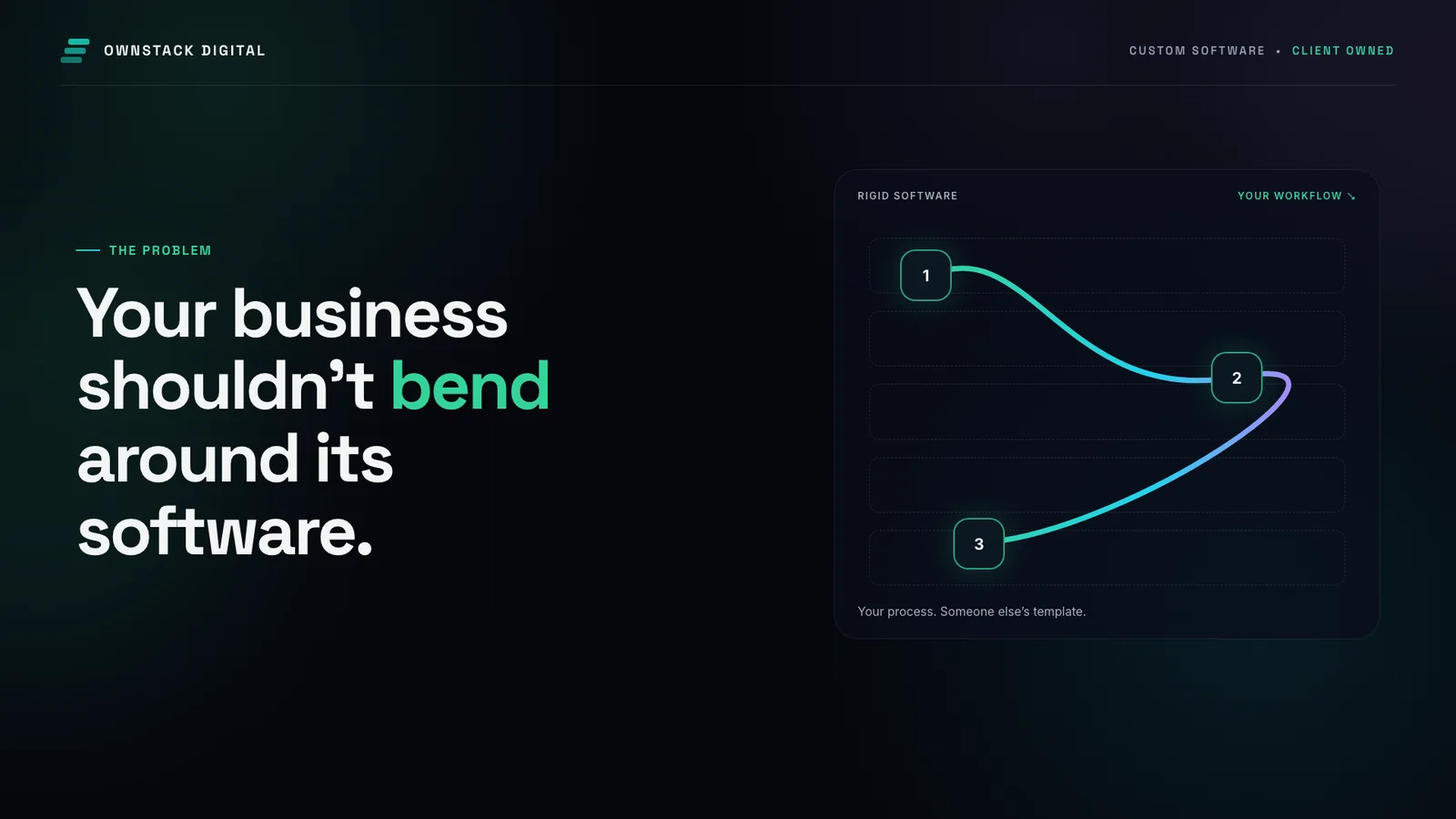
The useful question is not “custom or off-the-shelf?” in the abstract. It is whether your business should keep adapting to its software, or whether the software should be built around the way your business creates value.
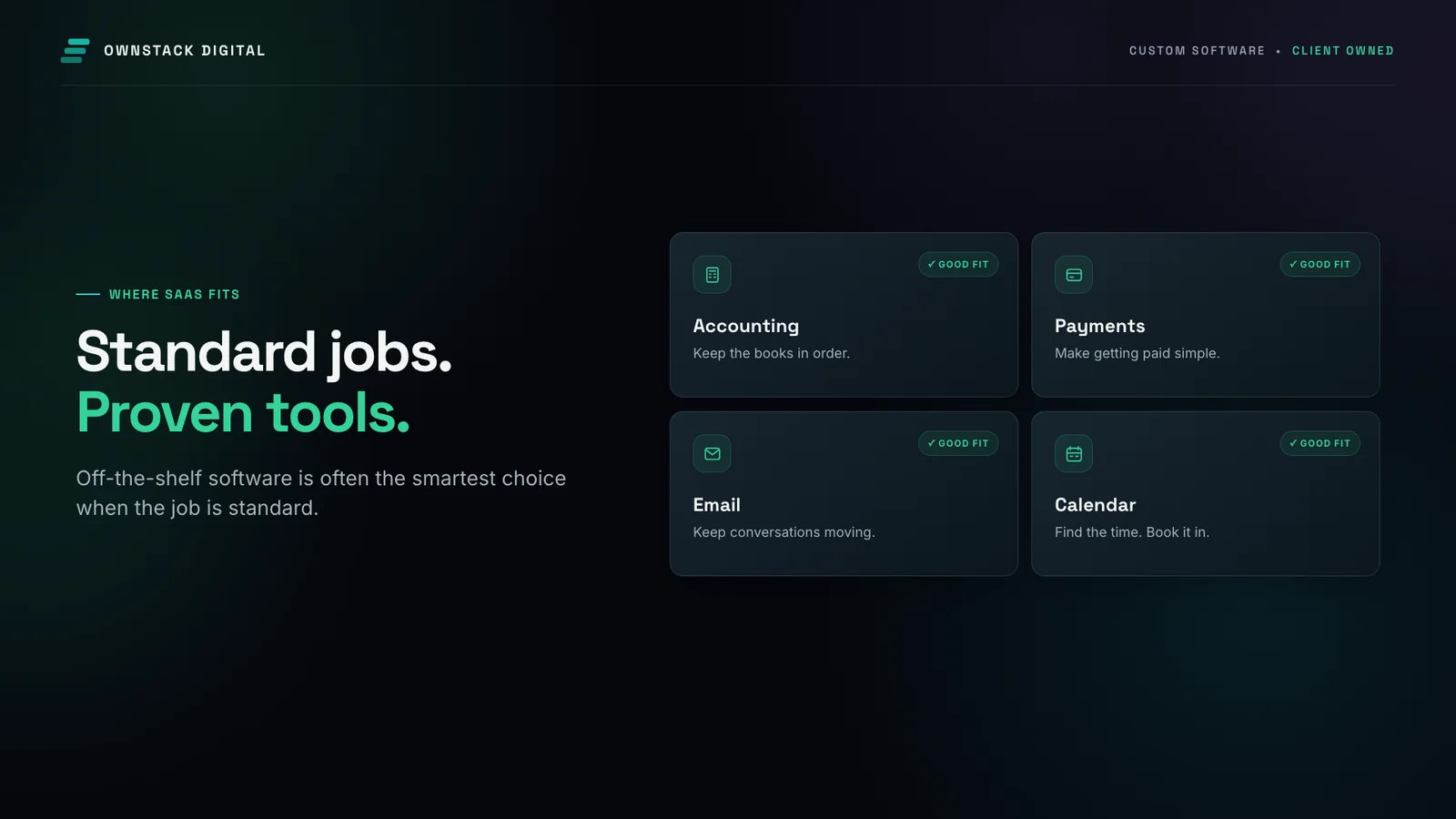
Off-the-shelf tools are useful for standard tasks such as accounting, email and calendars. But your core workflow is different. When that workflow drives how you quote, deliver, communicate or get paid, owning a system designed around it can remove repeated admin, connect the work and give the business an asset it controls.
The decision comes down to the cost of the gap: what does the generic system leave your team doing by hand every week?
Keep proven tools for the jobs they already solve
A client-owned system does not need to replace everything. Keep established products where the task is genuinely standard and the product fits without forcing workarounds:
- accounting software for the books;
- payment providers for securely taking payments;
- email and calendars for everyday communication; and
- specialised platforms where their ecosystem or compliance coverage is the real value.
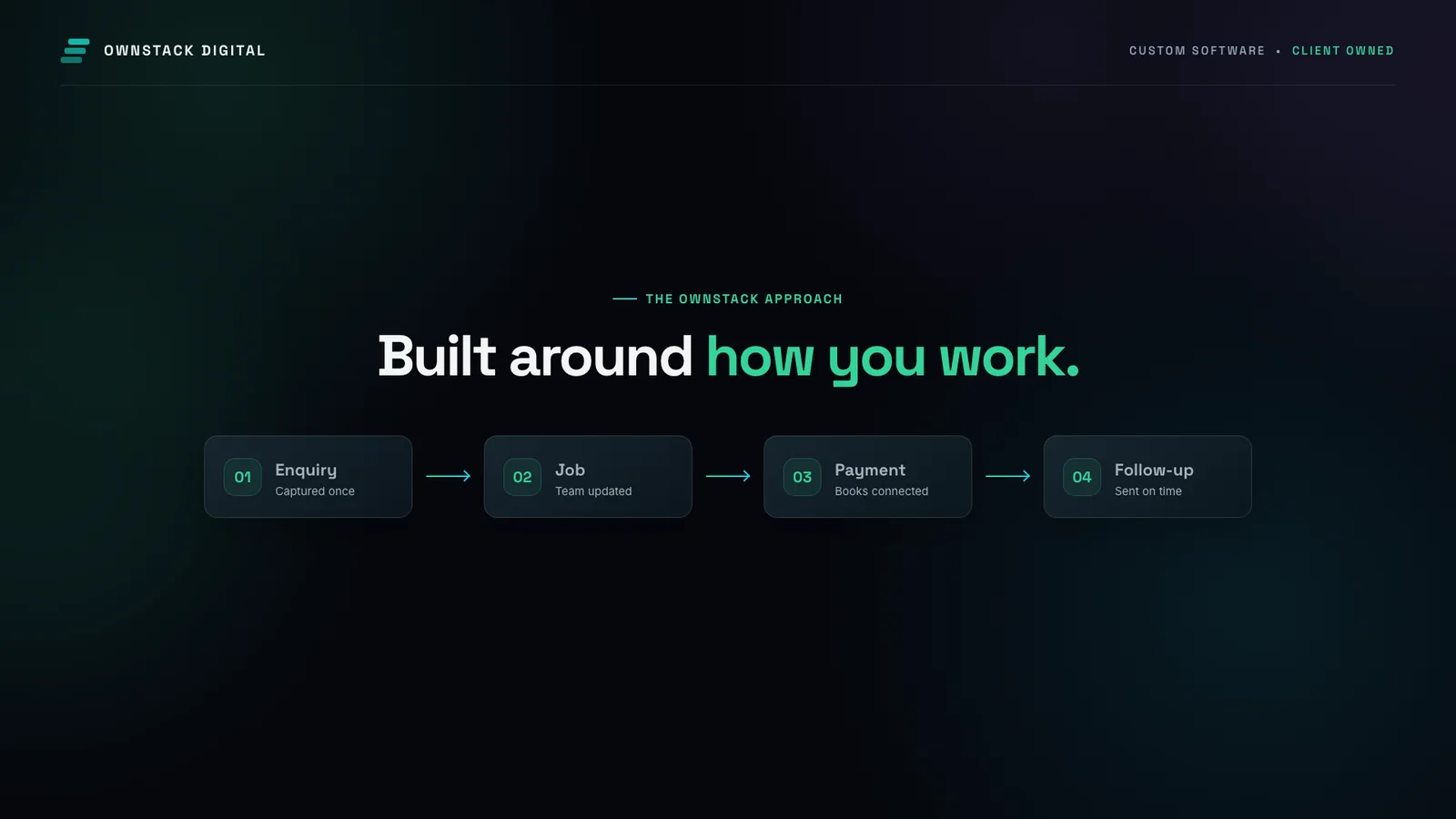
The opportunity is in the layer those products do not provide: the workflow that connects them and reflects how your business actually operates. OwnStack can build that focused layer while leaving the proven tools to do what they do well.
Look for the workarounds, not the wish list
Do not begin with a long software wish list. Begin with the repeated friction that is already costing the business time, money or customer trust.
Look for the same problems happening every week:
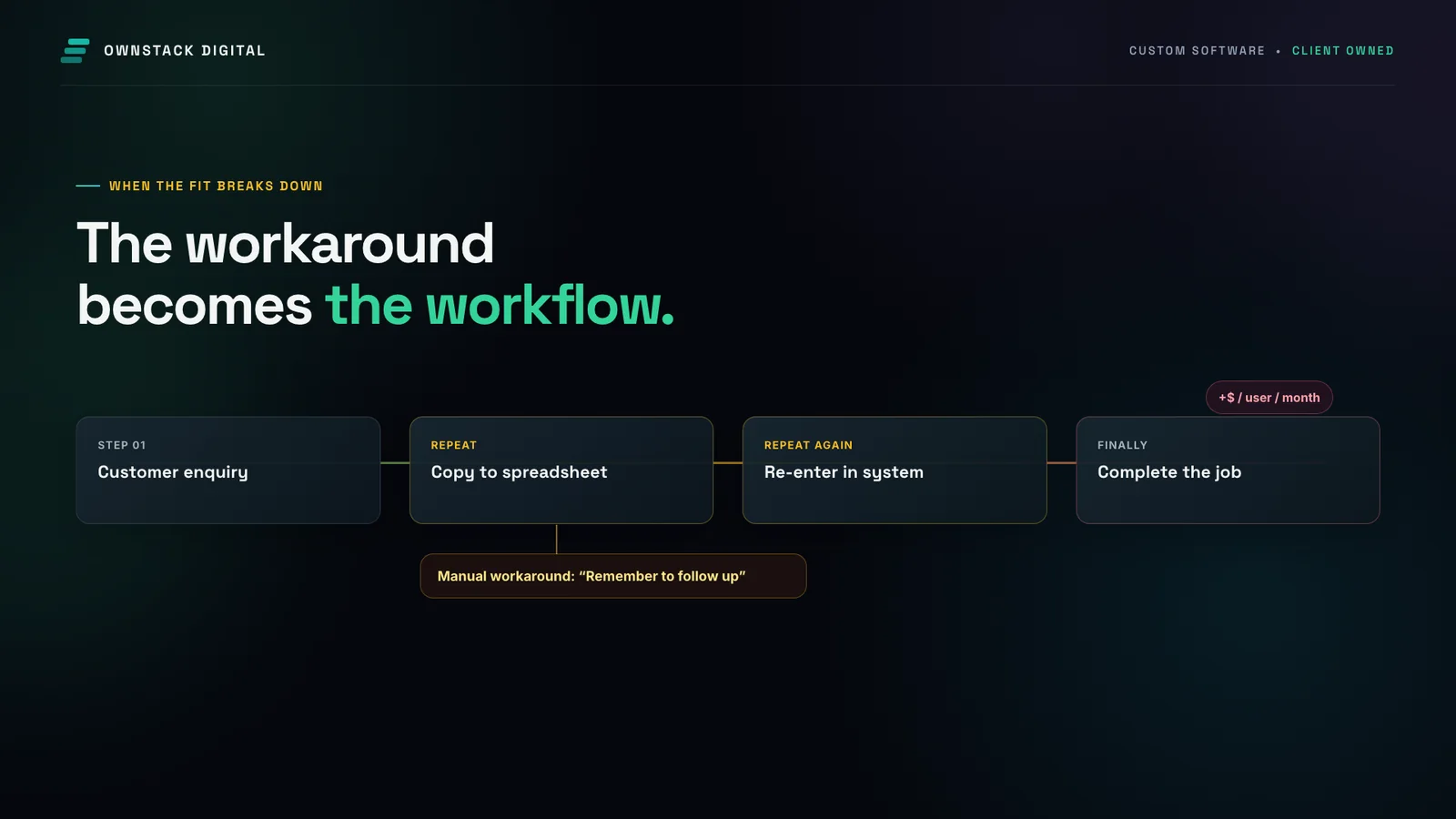
- Information is copied from one system into another.
- Staff keep a spreadsheet beside the “real” system because it cannot represent the job properly.
- Customers call or email for information that already exists somewhere in the business.
- A simple workflow needs several subscriptions, plugins or per-user licences.
- Your team has changed how it works to suit the software, even though the old process was better for the customer.
One small workaround is normal. A chain of workarounds that has become the actual workflow is worth examining.
When client-owned software becomes the stronger choice
A focused, client-owned system is often the stronger investment when several of these are true:
- The workflow creates an advantage. The way you quote, schedule, deliver or communicate is genuinely better than the standard process.
- The workaround has a measurable cost. You can point to hours of repeated admin, missed follow-ups, avoidable errors or customers waiting for answers.
- Generic pricing grows faster than the value. Per-user, per-location, transaction or plugin fees keep rising while the underlying need stays simple.
- The process is stable enough to describe. Your team can walk through a real job from first enquiry to payment and identify where it goes wrong.
- You need control more than a marketplace. Owning the code, data and hosting matters more than having thousands of third-party extensions.
The best first version is rarely a replacement for everything. It is usually the highest-value missing piece: a customer portal, a staff workflow, or a connection between tools you already use. That focused build can remove the workarounds now and grow with the business later.
What “you own it” should mean
Ownership is where a custom OwnStack build creates lasting value. It should be concrete, not a slogan:
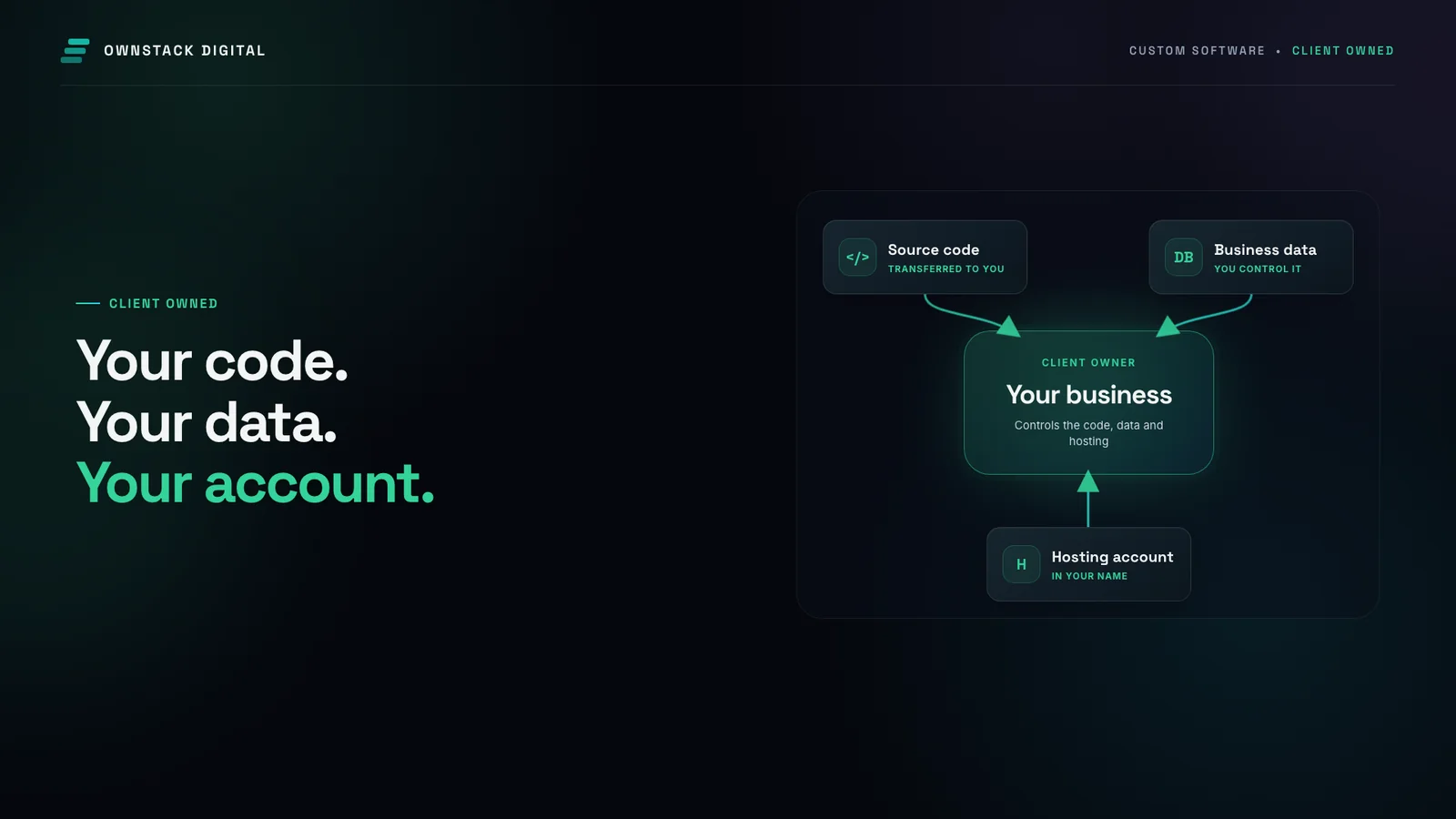
- The project source code is delivered to you.
- Your business controls its data.
- Hosting and service accounts stay in your name.
- Another capable developer can take over if needed.
- The system keeps running if our working relationship ends.
Third-party services and open-source packages still have their own licences and costs. Ownership does not mean the system has no dependencies; it means your supplier is not holding the keys.
The cost comparison needs a long view
Custom software moves more of the cost upfront and still needs maintenance. In return, it can replace recurring licences and plugins, remove paid admin hours, and leave the business with a system it owns. Subscription software lowers the entry cost, but its user, transaction and add-on fees continue for as long as the business depends on it.
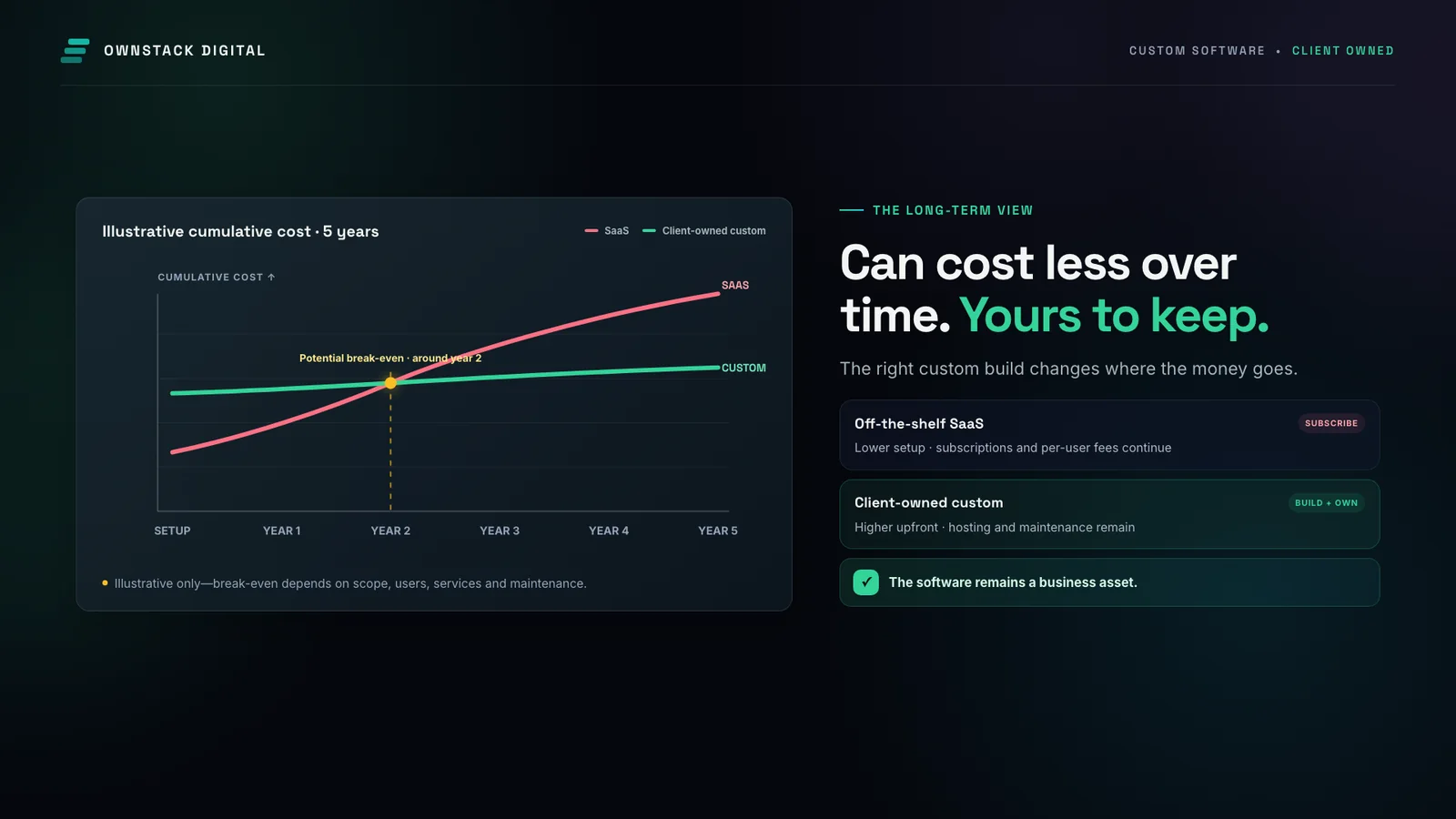
A fair comparison includes:
- build or setup cost;
- hosting and maintenance;
- subscriptions, plugins and transaction fees;
- staff time spent on duplicate entry and workarounds;
- the cost of errors, delays and missed follow-ups; and
- the value of being able to change the workflow without waiting for a vendor.
The break-even point varies with scope, number of users, third-party services and how much manual work is removed. The financial case becomes stronger when fees are growing, the workflow is stable and the same avoidable admin happens every week. Treat the chart as an illustration rather than a fixed promise.
A practical next step
Choose one recent customer or job and map what happened from first contact to money in the bank. Write down every hand-off, copy-and-paste step, spreadsheet, status call and subscription involved.
Then ask two questions:
- Which steps are standard enough to leave with the tools we already trust?
- Which steps create our advantage—or cost us enough time—that we should own how they work?
That reveals the smallest useful custom build. It might be a connection between existing tools, a customer portal or a focused operating system for the workflow at the centre of the business.
Video transcript
Your business shouldn’t bend around its software.
Off-the-shelf tools work well for standard jobs.
But when your workflow makes you different, generic software can create workarounds, repeated admin and growing fees.
OwnStack builds around how you work.
You own the code and data; hosting stays in your name.
Custom costs more upfront and needs maintenance—but it can lower recurring platform fees while giving you control, flexibility and an asset.
Own what makes you different.
If these workarounds sound familiar, tell us how a job comes in. We will map the gaps and recommend the smallest client-owned build that removes meaningful work from your week.